2021 was not a good time for me. I was chronically depressed, miserable, lonely and still reeling from events that had occurred the previous year during the pandemic. I was at my lowest point and felt incredibly disillusioned with life itself. However in spite of this, music proved to be a very powerful form of escapism for me, it helped me get through those hard times and it helped me deal with all these negative emotions.
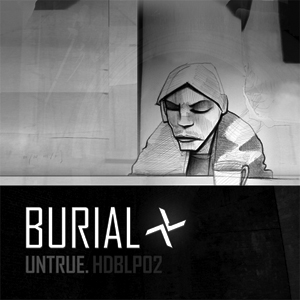
One of these albums that got me through that incredibly arduous period in my life was Burial’s second studio album “Untrue” originally released back in November of 2007. I first discovered this album during the Autumn of 2021, around late September of that year by my rough approximation; at the time I was listening to a lot of extremely dark and brooding albums including Massive Attack’s “Mezzanine”, Nine Inch Nails’ “The Downward Spiral”, Boards of Canada’s “Geogaddi” and Air’s “10,000hz Legend”. I was already familiar with those albums before but I discovered Untrue fairly late; I only discovered it on a whim after it being recommended to me on Apple Music. I was somewhat aware of the reputation that Untrue had as one of the best electronic albums of the past two decades but it had just completely passed me by until late 2021.
All I can say though is that I’m glad I did get around to discovering it; not only do I agree with the sentiment that Untrue is one of the best electronic albums of the 2000s, I personally believe it might be up there in my personal top 5 for best electronic albums ever made. I’ve come to accept this album wholeheartedly as a part of my life and I truly believe it is a work of sheer unbridled genius.
If you aren’t familiar with Burial or his work then allow me to explain. Burial is the alias of electronic musician William Bevan, hailing from South London. Initially, Burial decided to remain anonymous and it wasn’t until 2008 when he was finally outed by The Independent and by Hyperdub itself, his record label that he had been signed to since 2005, becoming one the first acts to sign to that label.
Burial first made a name for himself in 2006 with the release of his self titled debut album which was named the album of the year by The Wire. The album showcased a very claustrophobic, menacing and foreboding side to the rave music scene that was prominent in the UK during the early to mid 2000s. Incorporating various elements of dubstep, 2-step and UK garage, Burials debut has been retroactively described as a sullen audio representation of London.
However while Burial’s debut was critically successful and placed highly in numerous album of the year polls, it was nothing compared to what Burial would achieve on his next album “Untrue”.
“Untrue” was even more emotionally raw and atmospheric, however this time around instead of going for a very foreboding tone, “Untrue” sounds intimate, melancholic and sad. It’s a very deeply personal and haunting record that blurs the lines between dubstep, ambience, garage and even R&B. Through Burial’s use of ghostly vocal samples, crackling textures and off-kilter beats, “Untrue” is very much the soundtrack for longing for the past. All those moments and all those memories, lost in time, like tears in the rain.
“Untrue” is very much a landmark release in the electronic music genre, it didn’t just shift the landscape of the genre – it redefined it. The album excels at conjuring up images of walking home late at night in the rain, weary and tired through urban landscapes. “Untrue” is a very raw look into the lives of city dwellers, night walkers and those navigating heartbreak and sadness through the foggy peripheries of modern life.
What makes “Untrue” even more impressive is the fact that Burial produced this album on a really cheap laptop with only the aid of a software program called SoundForge. Ordinarily most electronic musicians when they would produce using a computer, they would use a DAW or digital audio workstation to help them record, edit and produce digital audio. However Burial’s approach to making beats was different. SoundForge is not a DAW, it’s mainly used for audio editing and processing much like Audacity. Because of this, SoundForge lacks the ability to quantise drum patterns and doesn’t follow a grid system for making music. This leads to Burial’s drum beats sounding off-kilter and wonky and is what gives his beats that distinctive swing that has become almost synonymous with his music. This wonky sound also makes his music very hard for DJ’s to mix. However this is what I love about this album, the fact that it was made using a really cheap old laptop with minimal software means that it has inspired countless producers and has become extremely popular for budding producers to replicate because of its DIY nature and sound. Artists like James Blake, Jamie XX, Actress and Overmono being among those heavily inspired by Burial’s work and this album in particular.
Sonically, “Untrue” isn’t flashy, it’s subtle and soaked in emotion. It revels in its atmosphere and captures a tangible sense of loneliness and longing that’s almost impossible to describe but easy to recognise. It’s sad, beautiful and extremely confessional.
The album opens with one of Burial’s most well known and iconic tracks “Archangel” which sets the tone for the album evoking feelings of nostalgia and painful yearning. It’s use of chopped up and pitch-shifted R&B vocals sampled from Ray J’s 2005 single “One Wish” make this track feel extremely emotionally potent and heartbreaking with its refrain of “Holding you, couldn’t be alone”. It’s simultaneously both fragile yet gritty with its deliberately imperfect drum beats which sound like they’re sampled from Metal Gear Solid, vinyl hiss and crackle and rain ambience. The ambience isn’t here just to function as window dressing; it is the canvas itself with other tracks on the album very much following a similar formula. The mournful synths used in this song are also sampled from Metal Gear Solid which further adds to the eerie and haunting vibes this track is going for. It’s no wonder why this track is now regarded as the most iconic track and the biggest emotional centrepiece on this album.
“Near Dark” is a more fast paced jittery track which makes it slightly more suitable for club listening but it still contains all the emotional elements of the previous track. The vocal sample is distorted and barely audible, almost sounding like it’s struggling to communicate. You really do get a real sense of anxiety and dread on this track because of its frantic pacing and more dynamic and urgent mood; upbeat yet still melancholic. The hi-hats are skittering, the drum pattern is glitchy, the vocal samples are chopped and restructured to the point of abstraction, where they sound more inhuman. Yet despite this the mood is just as emotionally potent and desperate as the previous track and it really succeeds at evoking images of urban England.
“Ghost Hardware” is similarly emotionally dense and rich with atmosphere. Like the previous track it’s rhythmic and textural, yet fragmented. Voices float in and out and sound spectral and haunted, it constantly feels as though these voices are trying to say something coherent but are constantly silenced by the crushing weight of ambient hiss, vinyl crackle and foley. These voices are emotional but never say anything directly adding a layer of emotional distance. You can hear the feelings behind the track but they’re muffled, distorted and hard to interpret. The beat is even more skittering and anxious and in some parts the rhythm almost sounds like a passing train, the bass is pounding and the genderless vocal samples make this track one of the more emotionally intense moments on the album. It feels even more claustrophobic and paranoid and seems to be a direct answer to “Archangel”. “Archangel” is a track that is beckoning for emotional connection whereas “Ghost Hardware” is the sound of what happens when that cry goes unheard.
The next track is one of a series of short ambient interludes that occupy the album which allow the listener a moment of stillness and reflection but not relief; they feel more like lying down in the dark and staring at the ceiling but your mind and your thoughts are still racing. “Endorphin” is the first of these interludes and completely eschews any sense of structure. It doesn’t have a melody or a rhythm; this track is pure mood and feels suspended in time. The title of the track is especially ironic; there is no joy here. There’s a peacefulness to this track but at the same time it has a coldness to it and a real sense of emotional numbness almost like a false calm. It also sounds like how it feels after a long crying session after the feeling has hit; you’re not crying anymore but at the same time you’re not necessarily okay. The track is crammed full of haunting wails to perfectly capture the feeling of emotional quiet. Despite being one of the shortest tracks on the album only clocking in at 3 minutes, “Endorphin” is one of the most powerful moments on the album. It’s quiet but it’s honest and still just as emotionally potent as the tracks that have come before.


 The Sound